
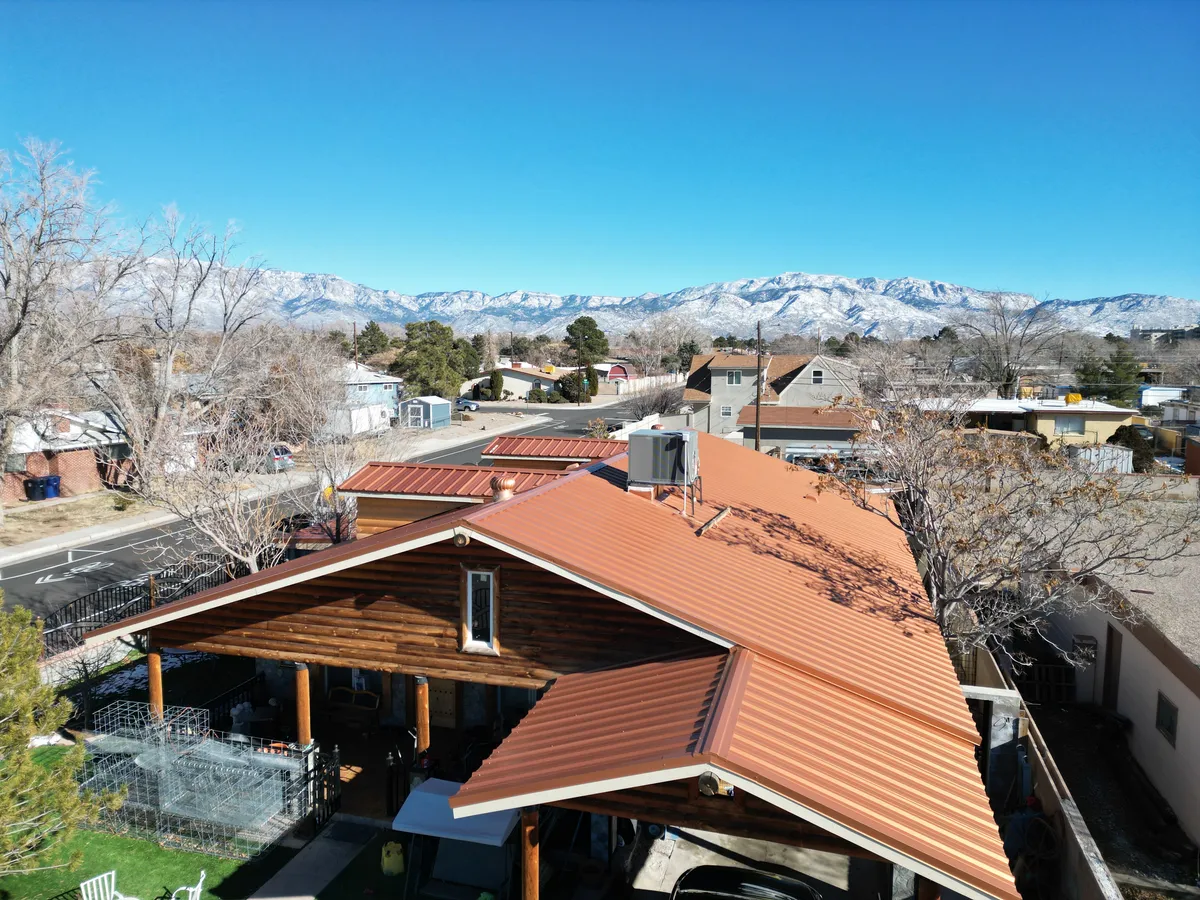
Defeating Thermal Expansion & High-Desert UV in New Mexico
In our New Mexico operations, roofing expertise centers heavily on defeating thermal expansion and extreme ultraviolet (UV) degradation. Albuquerque’s high elevation subjects roofing systems to aggressive daily temperature swings, where freezing night temperatures rapidly give way to searing, unshaded desert sunlight.
For the Southwest's signature Southwestern and modern flat roofs, traditional systems quickly dry out, crack, and fail if seams and flashings are not engineered correctly. Fadraga counters these conditions by deploying advanced, UV-stable Thermoplastic Polyolefin (TPO) single-ply membranes and reinforced multi-ply modified bitumen torch-down systems. Each installation is engineered with elastomeric coatings, customized parapet cap flashings, and dedicated ponding-water mitigation, ensuring low-slope roofs remain elastic, sealed, and impervious to blistering.
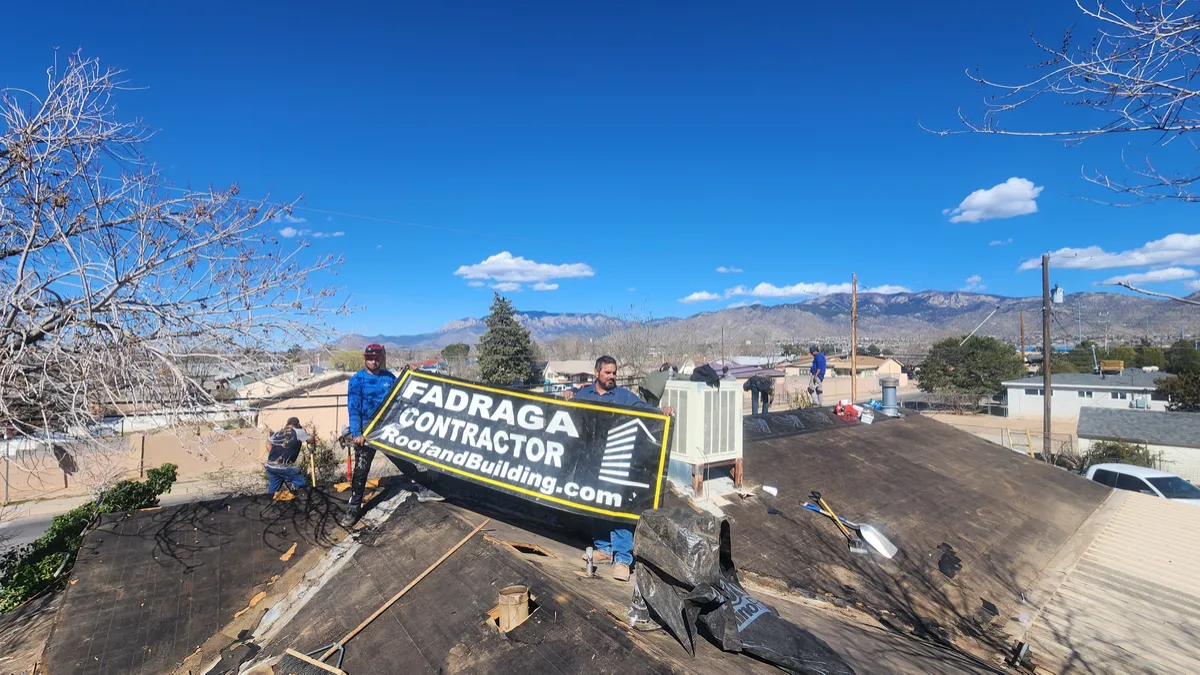
Tackling Gulf Coast Torrential Moisture & 130 MPH Wind Uplift
In our Houston location, roofing expertise pivots to tackle torrential moisture volume, relentless relative humidity, and the threat of tropical storm systems. Coastal Texas roofs do not simply shed water; they must actively resist wind uplift exceeding 110 to 130 mph and block wind-driven rain from penetrating the building envelope.
Fadraga brings rigorous building science to Houston residential and commercial installations, incorporating heavy-duty synthetic underlayments, ice and water leak barriers along all critical valleys and rakes, and strict adherence to Texas Department of Insurance (TDI) windstorm fastening patterns. Our Houston crews focus heavily on attic ventilation mechanics—pairing continuous ridge vents with balanced soffit intake systems to expel trapped heat and eliminate attic condensation before it compromises the roof deck.
New Mexico Engineering Profile
• UV-reflective white TPO membranes
• Thermal expansion & diurnal shock protection
• Parapet caps & elastomeric seamless coatings
• Rapid snowmelt & summer monsoon canal drainage
Houston Coastal Engineering Profile
• 6-nail TDI windstorm fastening up to 130 mph
• Self-adhering ice & water valley barriers
• Continuous ridge & soffit attic ventilation balance
• Algae-resistant Class 4 impact shingles
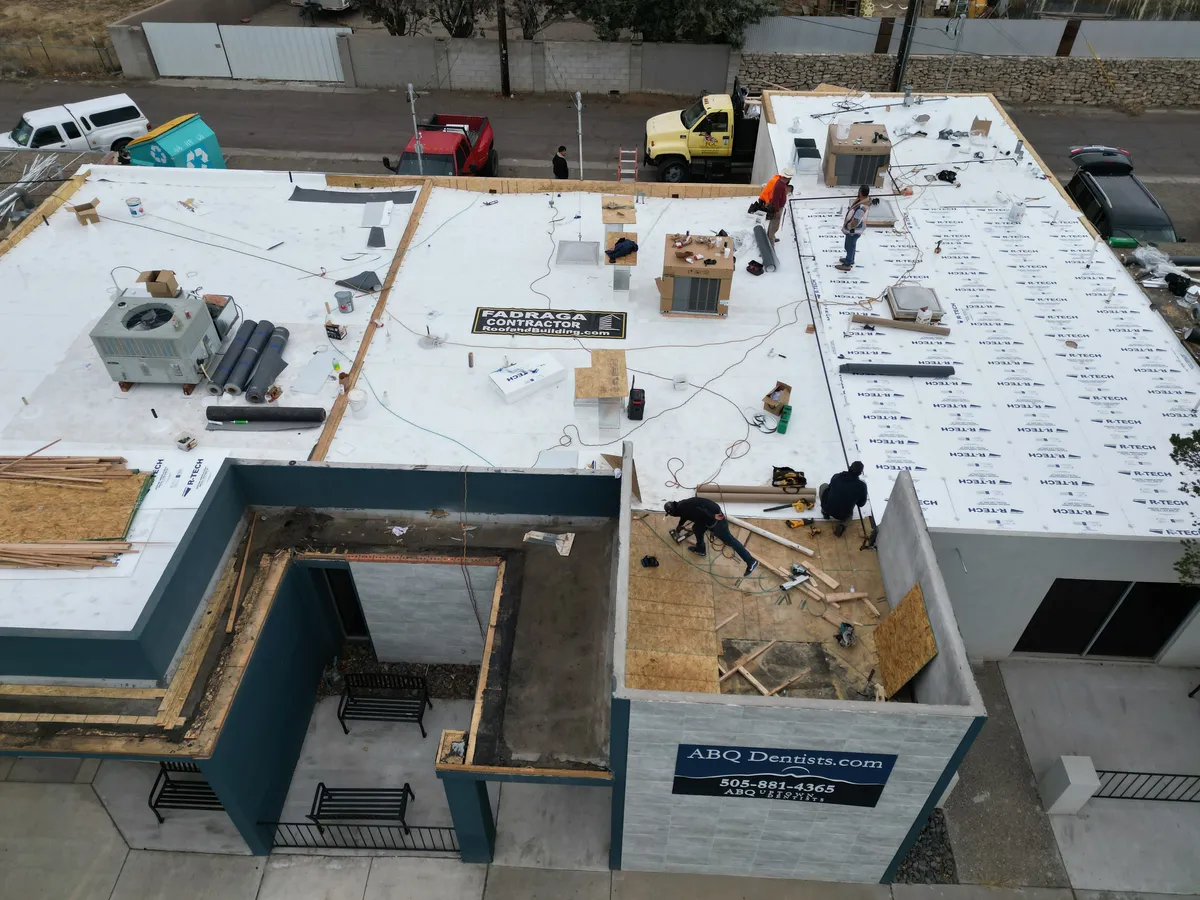
Never Cutting Corners Beneath the Surface Layer
What unites both our New Mexico and Houston teams is a refusal to cut corners beneath the surface layer. A roof’s true performance depends on the substrate, edge metal, and penetrations.
Before any new shingle, tile, or membrane is applied, Fadraga crews conduct thorough tear-offs and deck inspections, replacing deteriorated plywood, verifying truss framing, and installing heavy-gauge drip edges and valley liners. We maintain close partnerships with industry-leading manufacturers such as GAF, CertainTeed, and Owens Corning, ensuring our clients receive fully warrantied assemblies backed by certified installer standards. Whether protecting a multi-family property from sudden Gulf rain or reroofing a residence against high-desert hail, we approach every square foot with structural accountability.
Ultimately, choosing Fadraga Construction means partnering with a roofer that understands the microclimates of two distinct building environments. Our dual presence allows cross-regional insight: the extreme thermal resilience mastered in Albuquerque informs our understanding of material durability, while our Gulf Coast wind and moisture protocols raise the standard for waterproof detailing everywhere we build. From initial free drone and attic inspections to comprehensive insurance restoration, turnkey reroofing, and commercial installations, Fadraga Construction delivers roofs built to last, guaranteed by local accountability and old-school craftsmanship.
5 Essential Roofing Questions & Answers
Click any question below to expand technical insights from our master roofing team.
While minor leaks around a pipe boot or a few displaced shingles can often be repaired locally, a complete replacement is warranted if:
- Widespread Granule Loss: Shingles have bald spots and gutters are packed with granules, signaling the asphalt core is dried out and exposed to direct UV rays.
- Substrate Deck Rot: Soft, spongy spots when walked on indicate that moisture has penetrated the underlayment and rotted the plywood decking underneath.
- Multiple Past Layers: Building codes generally limit roofs to two layers of shingles; if your property already has two layers, any new work requires a full tear-off down to the rafters.
- Extensive Storm or Hail Bruising: Hail impacts that fracture the fiberglass mat or wind uplift spanning more than 25% of a roof slope compromise the entire assembly's watertight rating.
Both are excellent low-slope options, but they excel in slightly different scenarios:
- TPO (Thermoplastic Polyolefin): A bright white single-ply membrane with hot-air-welded seams. It is highly reflective, drastically cutting summer air-conditioning loads by bouncing away UV radiation. It is virtually immune to chemical and biological growth, making it ideal for modern flat roofs and commercial structures.
- Modified Bitumen (Torch-Down): A multi-ply asphalt system reinforced with polyester or fiberglass mats. It provides superior puncture and foot-traffic resistance compared to single-ply sheets, making it ideal for flat residential roofs with high rooftop traffic, HVAC access walkways, or heavy surrounding tree cover.
Properties in Houston and the surrounding Gulf Coast need specialized protections against sustained gale winds and water intrusion:
- Six-Nail Fastening Pattern: Standard non-coastal installations use four nails per shingle; coastal code mandates a 6-nail pattern placed precisely in the manufacturer's nailing strip to resist uplift speeds up to 130 mph.
- Self-Adhering Starter Strips & Underlayment: Installing peel-and-stick modified bitumen membranes along all eaves, valleys, and rakes creates a secondary waterproof barrier even if shingles blow off.
- Class 4 Impact-Rated Architectural Shingles: Enhanced shingles reinforced with polymer-modified asphalt provide maximum resistance against flying storm debris and severe hail.
A roof is a dynamic breathing system, not just a solid lid. In hot, humid climates like Houston, trapped attic heat can exceed 140°F (60°C), literally baking shingles from underneath and causing premature blistering, curling, and adhesive failure. Simultaneously, unvented indoor humidity migrates into the attic, condensing on cold surfaces and causing wood rot and toxic mold.
A balanced passive ventilation system (intake through soffits, exhaust out through the ridge) creates continuous airflow, balancing attic temperatures with the outdoor air and extending the roof's lifespan by years.
To ensure your claim covers the true scope of damage:
- Document Immediately: Take date-stamped photos and videos of fallen shingles, dented gutters, damaged window wraps, and any interior water leaks before making temporary emergency repairs.
- Perform Emergency Mitigation: Tarp exposed sections to prevent secondary damage (keep receipts, as carriers reimburse emergency mitigation costs).
- Have Your Contractor On-Site for the Adjuster Meeting: Never let the insurance adjuster inspect the roof alone. A qualified roofing contractor will walk the slopes alongside the adjuster, ensuring hidden hail impacts, compromised flashings, and municipal code upgrade requirements (such as required drip edge or ventilation retrofits) are included in the adjuster’s initial report.